
Micro ACS: 25 Cans-Per-Minute Automated Canning System
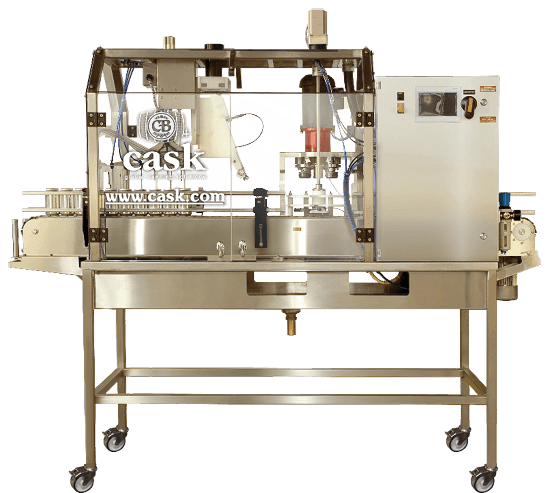
The Micro ACS is Cask’s 25 cans-per-minute automated canning system for producers who have outgrown manual or entry-level packaging and are ready to run serious in-house volume without a large-footprint line. It fills and seams 63 cases per hour, handles carbonated and still beverages, and changes over between can sizes in under 30 minutes, which is why it suits brands running multiple SKUs and product types.
Get A Personalized Demo
Access an interactive demo of the Micro ACS with video, turnkey options and more.

Talk To Cask
Talk to our team for expertise on your right-fit system and product, volume and facility needs.

Micro ACS Specifications
| Specification | Micro ACS |
|---|---|
| Production speed | 25 cans per minute / 63 cases per hour |
| Filling heads | 3 |
| Footprint | 2.7' x 7.6' = 20.5 sqft |
| Supported can formats | Standard, Sleek and Slim can formats |
| Can size changeover | Under 30 minutes |
| Beverage types | Beer, cider, sours, RTD cocktails, wine, coldbrew coffee, kombucha, other carbonated & still beverages |
| Seamer | Electric cam-driven seamer with stepper motor drive |
| Fill head | Universal fill head |
| Fill control | Proprietary foam-creation valves with fill-level sensors |
| Dissolved oxygen | 15–20 ppb DO pickup |
| Carbonation | Verified to 3.2+ volumes CO2 |
| Recipe memory | Stores fill settings per product for repeatable SKU changeovers |
| Liquid nitrogen dosing | Nitro-doser ready with OEM integrated controls |
| Operators required | 1 operator with infeed and outfeed automation |
| Enclosure | Polycarbonate enclosure for safety and hygiene |
| Power | Single phase, 208–240 VAC at 15 A, 50/60 Hz |
| CO2 | 25 psi from plant system, 3/8" barbed fitting |
| Compressed air | Filler & seamer: 3 cfm at 90 psi. Optional air dryer: 12 cfm at 30 psi. Total system: 15 cfm at 90 psi. Compressor c/w refrigerated dryer and autofloat drain. |
| Water | 1/2" hot water line (clean-in-place), 1/2" cold water line |
| Product temperature | 32–35.6 °F (0–2 °C) |
| Cleaning | Clean-in-place with caustic |
| Installation & training | 3 days hands-on commissioning & training |
Where the Micro ACS Fits in the Cask Range
The Micro ACS sits one step above the Nano ACS and is generally the right choice when 18 cans per minute has become the bottleneck but a 40-50 cans per minute line is more capacity than a brand can fill. Producers commonly move to the Micro ACS when they are bringing packaging in-house from a co-packer or mobile canner, or when growing retail contracts beyond the taproom.
| System | Speed | Output | Use Case |
|---|---|---|---|
| Nano ACS | 18 CPM | 45 cases/hr | First in-house line, smallest footprint |
| Micro ACS (mACS) | 25 CPM | 63 cases/hr | Multi-SKU production, scaling past entry level |
| ACS Mobile | 40–50 CPM | 100–125 cases/hr | Mobile canning serving multiple sites |
| ACS V6 | 50 CPM | 125 cases/hr | Regional distribution volume |
| ACS FleX2 | 100 CPM | 250 cases/hr | High-volume and co-packing operations |
Fill Accuracy and Product Control
The Micro ACS uses proprietary foam-creation valves and fill-level sensors to reduce dissolved oxygen pickup. Cask customers achieve 15–20 ppb DO with product loss less than 1%. Fill level is controlled by sensor rather than by fill timing alone, so fill volumes stay consistent as production conditions change.
Valve and line restriction enable Cask systems to control the widest range of carbonation across in-line fillers. Customers package high carbonation beverages like seltzers at 3.2+ volumes of CO2.
Electric Cam-Driven Seamer
The Micro ACS combines a cam-driven seamer with an electric stepper motor, increasing seam reliability with significantly easier setup and maintenance than pneumatic seamers. Consistent seam-formation force is what produces consistent seam integrity meaning the difference between a can that holds and a can that leaks in distribution.
The electric seamer is easier to maintenance, with annual seamer maintenance offered through Cask.
What Beverage Products Cask Canning Systems Package
The Micro ACS packages nearly all carbonated and still beverages, including sour and hoppy beer, cider, wine, hard seltzer, RTD cocktails, cold-brew coffee, kombucha, tea and functional beverages. The Micro ACS handles Standard, Sleek and Slim formats with easy changeover between can-sizes due to innovative 3D inverters on the Quick Change Rinser that enables tool-less changeover in seconds.
Check out customer stories here.
Build A Complete Packaging Line
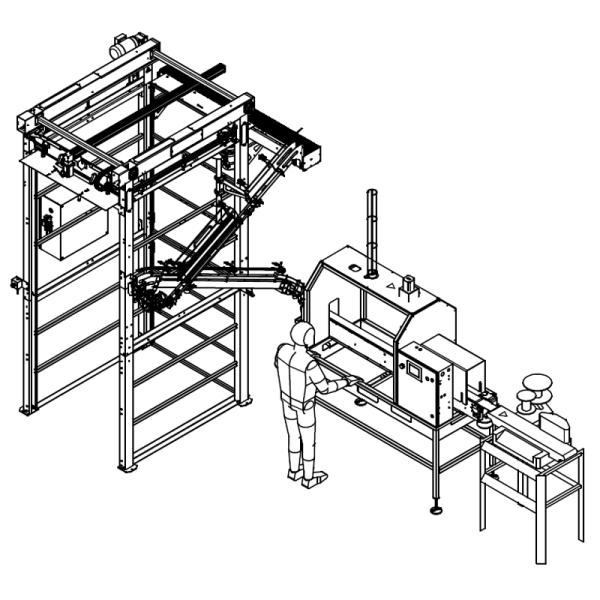
Increase infeed and outfeed automation, or add capabilities to the Micro ACS for a turnkey packaging system.
- Automated Depalletizer: Higher-volume full pallet infeed enabling single-operator set-up. See the Automated Depalletizer
- Modular Shaker Table: One-tier accumulation infeed that keeps cans supplied to the Micro ACS instead of an operator hand-loading them. Available with or without pre-rinser and in a half-height option.
- Date Coder: Domino Ax130i continuous inkjet printer for batch control and traceability.
- In-Line Labeler: Pack Leader ELF-50 pressure-sensitive wrap-around applicator, for brands running short-run or seasonal SKUs where printed cans are not economical.
- Nitrogen Doser: Chart Industries Ultra Doser with OEM integrated controls for packaging still beverages.
- Rotary Collection Table: Provides meaningful accumulation at the outfeed, reducing the need for additional operators.


Micro ACS FAQs
How fast is the Micro ACS?
The Micro ACS runs at 25 cans per minute, or 63 cases per hour. That places it between the 18 CPM Nano ACS and the 50 CPM ACS V6.
How long does it take to change between can sizes?
Under 30 minutes. The Micro ACS is engineered so one system handles nearly all can heights, body diameters and end types, and its recipe memory recalls stored fill settings for each product rather than requiring them to be re-dialled. Cask’s Quick Change Rinser infeed solution provides tool-less changeover, allowing you to swap out a 3D inverter set for additional can sizes in seconds.
What beverages can the Micro ACS package?
The Micro ACS packages still and carbonated beverages with 3.2+ volumes of CO2, including beer, sours, cider, wine, hard seltzer, RTD cocktails, cold-brew coffee, kombucha, tea and functional beverages such as THC and hemp beverages.
What dissolved oxygen levels does the Micro ACS achieve?
Cask customers achieve as low as 15–20 ppb DO pickup. Fill level is controlled by sensor, and proprietary foam-creation valves reduce oxygen pickup at the fill.
How many people does it take to run?
One primary operator with infeed and outfeed automation. Pairing the Micro ACS with an Automated Depalletizer or Shaker Table and a Rotary Collection Table provides the automation and accumulation time to support a 1 person operation.
Can the Micro ACS run liquid nitrogen dosing?
Yes. the mACS is nitro-doser ready with OEM integrated controls for still and low-carbonation beverages that need additional internal can pressure.
What utilities does the Micro ACS require?
Single-phase power at 208–240 VAC / 15 A / 50–60 Hz, CO2 at 25 psi, compressed air at 15 cfm / 90 psi for the total system, and 1/2" hot and cold water lines. Full detail is in the specifications table above.
How much floor space does the Micro ACS need?
The Micro ACS has a compact footprint at 2.7' x 7.6' = 20.5 sqft. Cask offers custom layouts and integration support to help minimize footprint and optimize your canning system in your facility.
Is the Micro ACS a good first in-house canning line?
It is generally the right first line for producers running more than one can format or moving off a co-packer with proven volume. Producers starting with a single SKU at lower volume more often start with the Nano ACS.
Does Cask supply and support canning systems in my region?
Yes. Cask supplies and supports canning systems internationally, with equipment running in 80+ countries and 1,800+ active customers. Cask has dedicated regional teams for North America and the UK & Europe. Installation, operator training, spare parts and ongoing support are provided on-site and/or remotely directly through Cask wherever you operate.
What does a Micro ACS cost?
The Micro ACS canning system starts at $71,000 USD and includes post-rinser and spare parts kit. Make sure to talk with the Cask team on costs for a right fit set-up, and checkout Cask's lease calculator tool to explore monthly payment options.
Do I need counter-pressure filling for my beverage, and does the Micro ACS support it?
Not all atmospheric fillers are built the same. Cask’s proprietary fill technology gives you precise control at the filler, allowing you to achieve high carbonation without changing your upstream process. Regardless of filler type, products at very high gas levels lose CO₂ during filling, so true in-can carbonation is often lower than assumed. Cask systems reliably tolerate 3.2+ in-can CO₂, validated through extensive testing with Anton Paar, covering virtually all commercial carbonation levels. If you’ve been told counter-pressure is required for high-carb products, the data tells a more nuanced story. Check it out.
What do installation and training look like with the Micro ACS?
Training is typically 3 days, and is always hands-on and production focused. We start with system and auxiliary setup checks, seamer calibration, water testing, clean in place (CIP) procedures, and packaging quality fundamentals, then move into live runs with your actual product. Training includes operator teach-backs and an operator-led production run so knowledge truly sticks.
What ongoing support does Cask provide after installation?
Cask supports customers for the lifetime of their equipment - with many of our customers running systems for 20+ years. We support customers directly in over 80 countries, and when you call Cask you get a real human on the phone because we know packaging doesn’t wait for ticket queues. Whether you need a quick question answered, live video troubleshooting during a run, overnight parts, or an on-site technician, Cask stands behind its equipment. Our goal isn’t just to fix issues, it’s to help you get the most value out of your system over its entire lifetime.